
01
CSRD & Regulatory Preparedness
Double materiality, ESRS gap analysis and governance built to withstand assurance.
Call me when: your first CSRD report is close and governance is not set
Independent advisory · Amsterdam
Clearer decisions. Defensible claims.
Senior judgment where sustainability meets governance, finance, and real-world exposure.
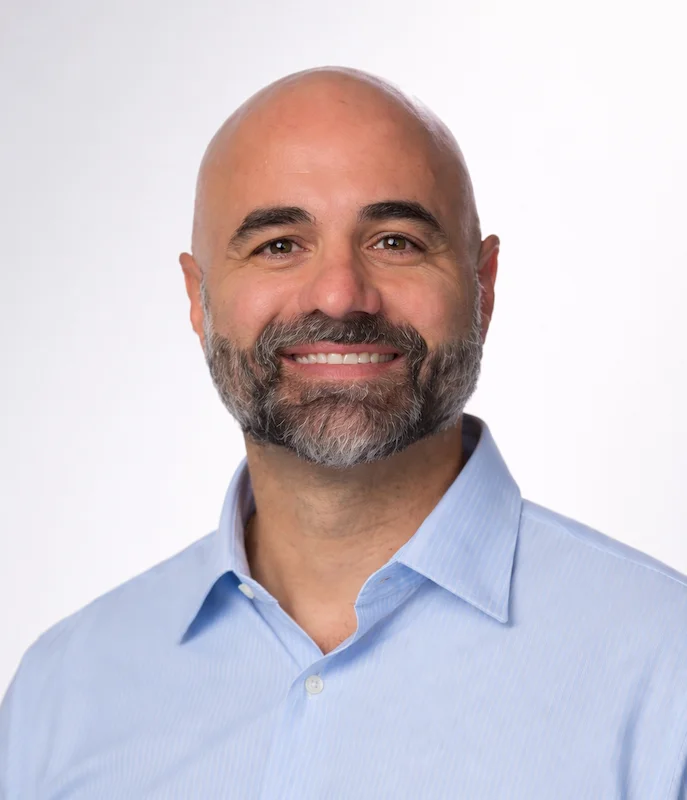
With José Yakoubian · Founder & Principal Advisor
Energy, capital markets, ESG governance
Thematic debt assessed by the EMEA team I led at Morningstar Sustainalytics
Listed companies assessed every year
Second Party Opinions delivered for
Logos shown to identify second party opinions issued.
EXPERIENCE ACROSS
HOW I HELP
Double materiality, ESRS gap analysis and governance built to withstand assurance.
Call me when: your first CSRD report is close and governance is not set
Second Party Opinions, EU Taxonomy and framework assessments, backed by EUR 30 to 50B of thematic debt work.
Call me when: a financing framework needs an external view on credibility
Programmes for leadership and risk teams on CSRD, ESG risk and sustainable finance.
Call me when: your board signs off disclosures it has not been trained on
Materiality and disclosure governance, informed by 100+ listed companies assessed every year.
Call me when: investors or rating agencies question your ESG risk profile
LARGER ENGAGEMENTS
GreenLine Studio is a solo practice by design. Some projects need more hands: a double materiality assessment across several entities, a first CSRD cycle in more than one country, a full EU Taxonomy alignment review. For those, I build a temporary team around your scope.
We define what the project needs: the expertise, the capacity and the timeline.
I propose candidates from a curated network of sustainability specialists, from analysts to senior experts. You take part in every selection decision.
I manage the team for the full duration, review every output, and remain your single point of accountability.
I have led research teams of more than 17 people, delivering to some of the most demanding clients in European sustainability and sustainable finance. That is where I do my best work.
HOW AN ENGAGEMENT RUNS
Who decides what.
Governance, data and materiality set before any writing.
Outputs built for external scrutiny.
Your team can maintain and defend it.
THE PERSON BEHIND THE PRACTICE
At Sustainalytics I tested whether sustainability claims deserved investor trust. Now I test yours. A decade in energy operations taught me to see risk at asset level, not only in reports. Venezuela, Canada, now Amsterdam.
Led the EMEA team delivering second party opinions across green, sustainability-linked and transition finance frameworks, and project managed or supported opinions for issuers including Vodafone, Volkswagen, Stora Enso, REWE and Standard Chartered, alongside underwriting banks including ING, Barclays, BNP Paribas, JPMorgan and Société Générale. The opinions were issued by Morningstar Sustainalytics.
You work with the person doing the work.
Stakeholders aligned and data pipeline built before a page is written.
Focused mandates, transparent scope, no large firm costs.
SELECTED WORK
Engagements marked Morningstar Sustainalytics were delivered in my role there. Second party opinions were issued by Morningstar Sustainalytics. The organisations named were clients of Morningstar Sustainalytics for these engagements. Their inclusion does not imply endorsement of GreenLine Studio.
CSRD & Governance
CSRD governance and climate transition work across manufacturing, insurance and financial services.
CSRD & Governance
Full double materiality assessment for an industrial group with no ESG function.
ESG Risk
100+ ESG risk ratings a year across energy and mining.
Sustainable Finance
Morningstar Sustainalytics · Second party opinion
Project managed the second party opinions on green financing frameworks for two of Europe's largest low-carbon mobility initiatives.
Sustainable Finance
Morningstar Sustainalytics · Second party opinion
Project managed or supported the second party opinions on financing frameworks for telecommunications and digital infrastructure platforms across Europe.
Sustainable Finance
Morningstar Sustainalytics · Second party opinion
Project managed the second party opinions on financing frameworks across banking, private credit, and investment holding platforms where financed emissions methodology and disclosure credibility carried direct implications for investor confidence.
Sustainable Finance
Morningstar Sustainalytics · Second party opinion
Project managed or supported the second party opinions on sustainability-linked finance frameworks for two of the world's largest retail and food groups.
Sustainable Finance
Morningstar Sustainalytics · Second party opinion
Project managed or supported the second party opinions on green financing linked to logistics real estate decarbonisation and energy-efficient buildings across Europe.
Sustainable Finance
Morningstar Sustainalytics · Second party opinion
Project managed the second party opinion on a combined green and sustainability-linked financing framework covering sustainable forestry, biomaterials, circular manufacturing, and industrial decarbonisation.
SHARING THE PERSPECTIVE
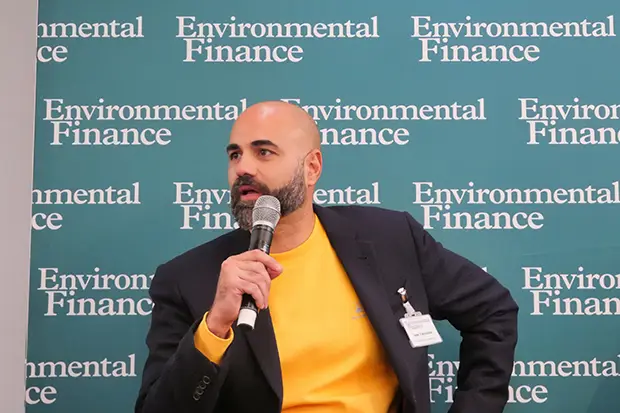
Invited speaker at Environmental Finance's ESG in Fixed Income EMEA conference. London, 2022
INSIGHTS
tmrw.earth
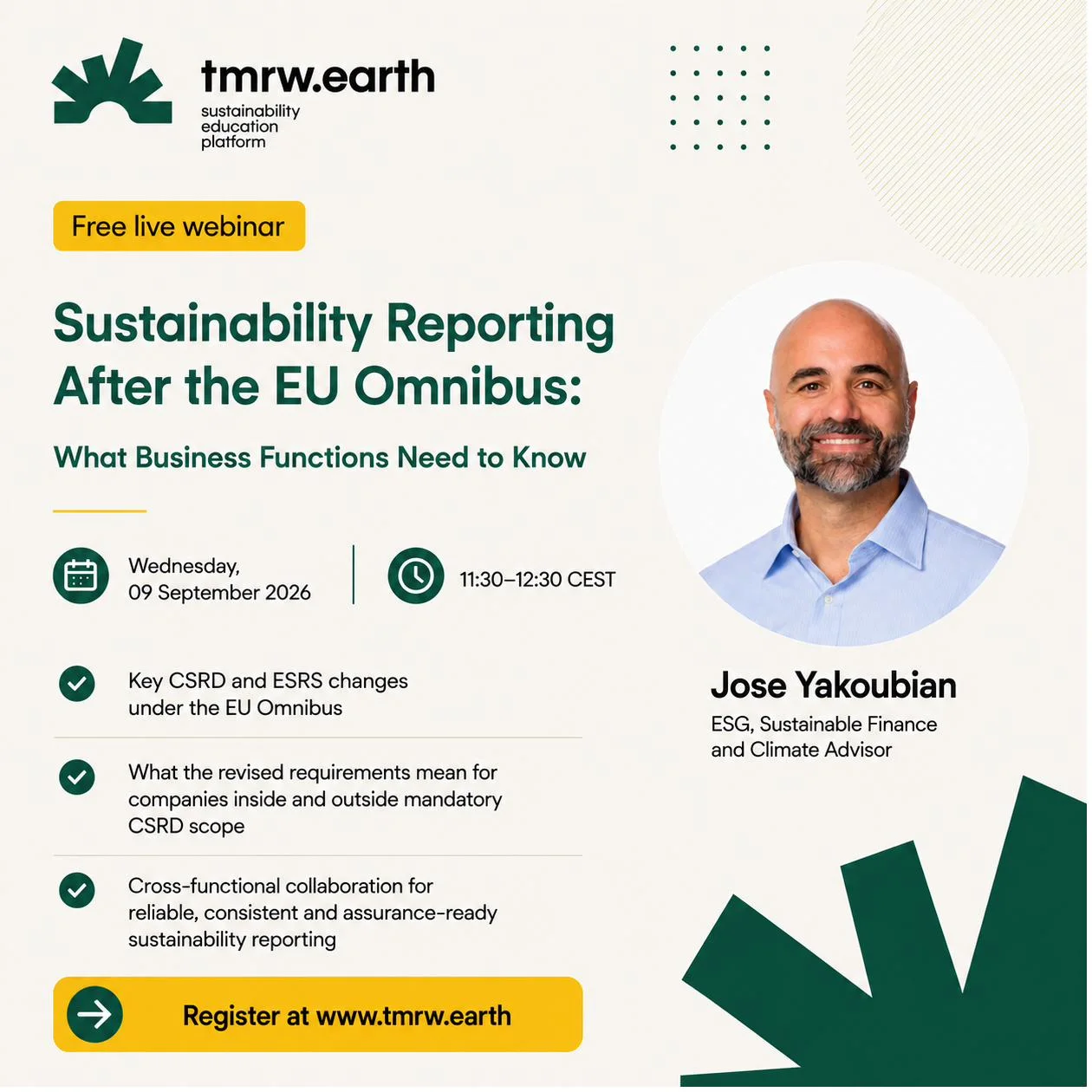
What business functions need to know
Part of my ongoing engagement with the community, sharing updates and perspectives on sustainability reporting. 9 September 2026.
See sessions on tmrw.earthSustainalytics
EXECUTIVE & PROFESSIONAL TRAINING
Sustainability reporting lands on people who never trained for it. I start from their own task, use real cases, and teach them to run and defend their metric.
hours delivered
in every evaluation category scored to date
01
Applied ESG, CSRD and sustainable finance for professionals.
For: sustainability analysts, ESG and QHSE managers, compliance, finance
Book a call02
The questions boards must ask before approving disclosures and claims.
For: CEOs, CFOs, board members, general counsels
Book a call03
Bring climate and sustainability risk into existing risk frameworks.
For: risk, internal audit, operations
Book a callDelivered in-person and virtually, for corporate teams and operational functions across sectors.
TRUSTED JUDGMENT
Capital Markets, ING
“I would frequently make a specific request to have José personally involved. He balanced experience and practicality with a rigorous approach, and consistently ensured optimal outcomes under pressure and short timelines.”
Director, Sustainable Capital Markets, ING
LET'S TALK
Tell me what you're navigating. Intro call, no obligation.
Book a callFounder & Principal Advisor
jose@greenlinestudio.nl+31 6 2939 6705